


Yes, you can use a crossbody bag on flights. Most airlines count a small crossbody as your personal item, which goes under the seat in front of you, and TSA screens it like any other bag. Keep liquids at 3.4 ounces (100 ml) or less in one quart-size bag, keep your laptop easy to remove, and check your airline’s size limit before you pack.
Key Takeaways
- A crossbody bag usually counts as a personal item, not a carry-on.
- Airlines set the size limits, so check your airline’s rules before you fly.
- TSA screens your crossbody bag, and liquids must follow the 3-1-1 rule.
- Laptops and power banks need special handling at the checkpoint.
- A crossbody keeps your passport and phone close, with your hands free.
- Leather crossbody bags are durable, and they look good on both short and long trips.
Can You Use a Crossbody Bag as a Carry-On or Personal Item?
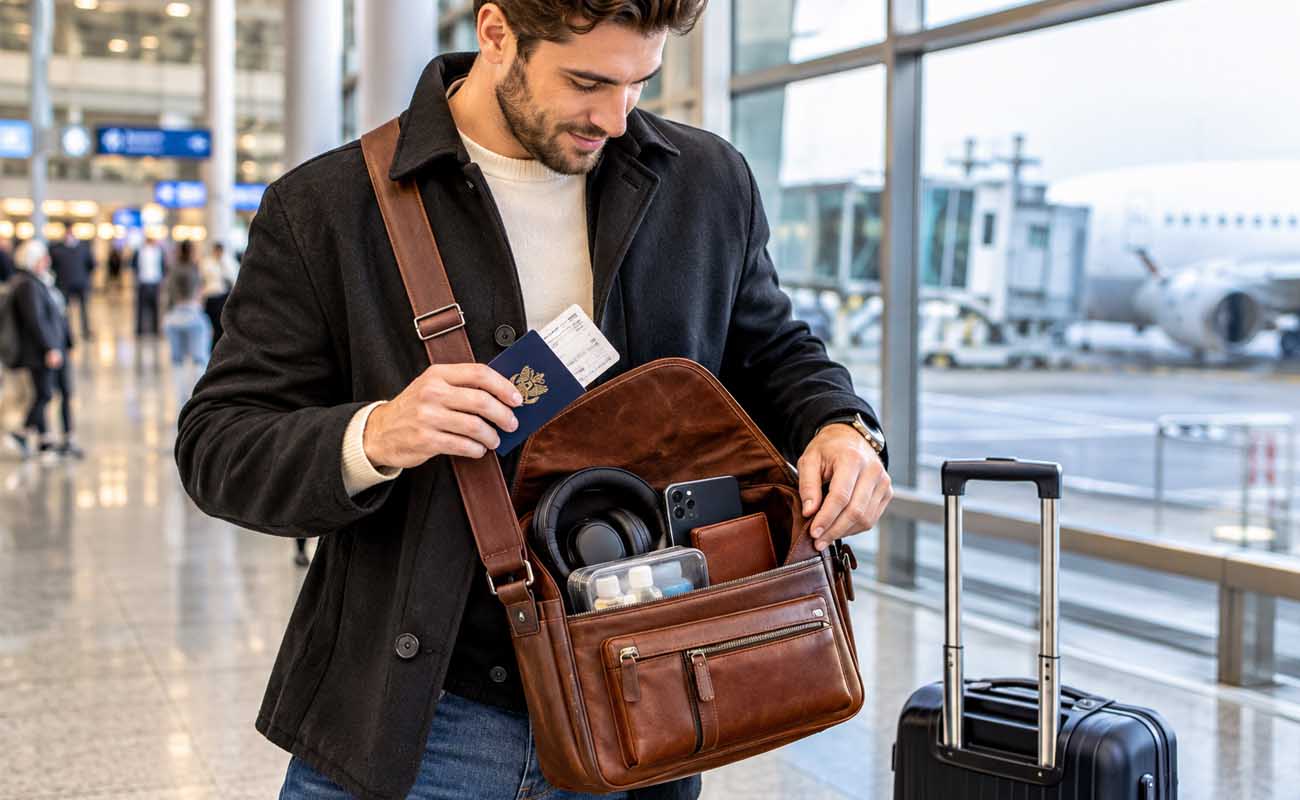
In most cases, a crossbody bag counts as a personal item, which is the smaller bag you are allowed to bring in addition to a standard carry-on. A personal item has to fit under the seat in front of you, so a compact crossbody is a natural fit. It holds your wallet, phone, passport, boarding pass, and a few small essentials, while a larger roller bag goes in the overhead bin.
There is one detail that surprises travelers. Many airlines allow either one personal item plus one carry-on, but some low-cost and basic fare types allow only the personal item, so a crossbody could be your entire cabin allowance. Policies change by airline and ticket type, so read your fare rules before you leave for the airport rather than relying on what you flew with last time.
A small crossbody can stay on your body during boarding and landing, which is where most travelers misplace things, and sit at your feet during the flight.
What Are the TSA Rules for a Crossbody Bag?
TSA does not set a size limit for your bag, because airlines handle that. TSA focuses on screening, and every bag, including your crossbody, goes through the checkpoint. A few rules matter most for a crossbody.
Liquids follow the 3-1-1 rule: each container must hold 3.4 ounces (100 ml) or less, and all of them must fit together in one quart-size bag per passenger. Keep that bag at the top of your crossbody or in an outer pocket, so you can pull it out quickly when the officer asks. TSA allows larger amounts of medically necessary liquids in reasonable quantities, but you should declare them at the checkpoint. You can confirm current details on the TSA security screening page.
Electronics also matter. Laptops usually need to come out of your bag and go in a separate bin, while TSA PreCheck travelers can generally keep them inside. Spare lithium batteries and power banks must travel in your carry-on rather than checked luggage. If your crossbody holds a slim tablet, charger, and power bank, plan for them to come out at the checkpoint if you are asked.
Rules can vary by airport and country, so treat the officer’s instructions as final. For more travel advice, browse our leather bag guides.
How Big Can a Crossbody Bag Be on a Plane?
Because airlines decide the size, there is no single answer. Many major airlines list personal item limits near 18 x 14 x 8 inches, while budget carriers can be stricter and charge a fee if your bag is too large. Most crossbody bags are far smaller than these limits, which is one of the style’s biggest advantages for flying.
A crossbody that holds a phone, wallet, passport, and a small tablet is safe on nearly every airline. A larger crossbody laptop bag may still qualify, but measure it with your items packed, not empty, because gate agents on strict carriers sometimes use a sizer. A soft leather crossbody that compresses slightly is easier to fit than a rigid bag of the same size.
What Should You Pack in a Crossbody Bag for a Flight?
The best flight packing strategy is to put what you need during the journey in the crossbody and everything else in your carry-on. Think of it as your in-flight command center. Keep your passport, ID, boarding pass, phone, wallet, and earbuds inside, along with a lip balm, hand sanitizer, and a pen for customs forms. A small portable charger is also useful, but remember it must stay in your cabin bag.
Here is a quick guide to where each item belongs.
| Item | Keep in Crossbody | Notes |
| Passport, ID, boarding pass | Yes | Use an inside zip pocket |
| Phone and earbuds | Yes | Easy-reach outer pocket |
| Wallet and cards | Yes | Keep close to your body |
| Liquids | Only if 3.4 oz or less | Must fit in one quart-size bag |
| Power bank | Cabin bag only | Never in checked luggage |
| Laptop | Only if it fits | Expect to remove it at screening |
Pack light inside the bag, because a crossbody that is overloaded pulls on your shoulder and spoils the comfort that made you choose it. If you find yourself needing more space, move bulky items to your carry-on or switch to a larger bag, such as a leather laptop backpack.
How Do You Get Through Airport Security Faster With a Crossbody Bag?
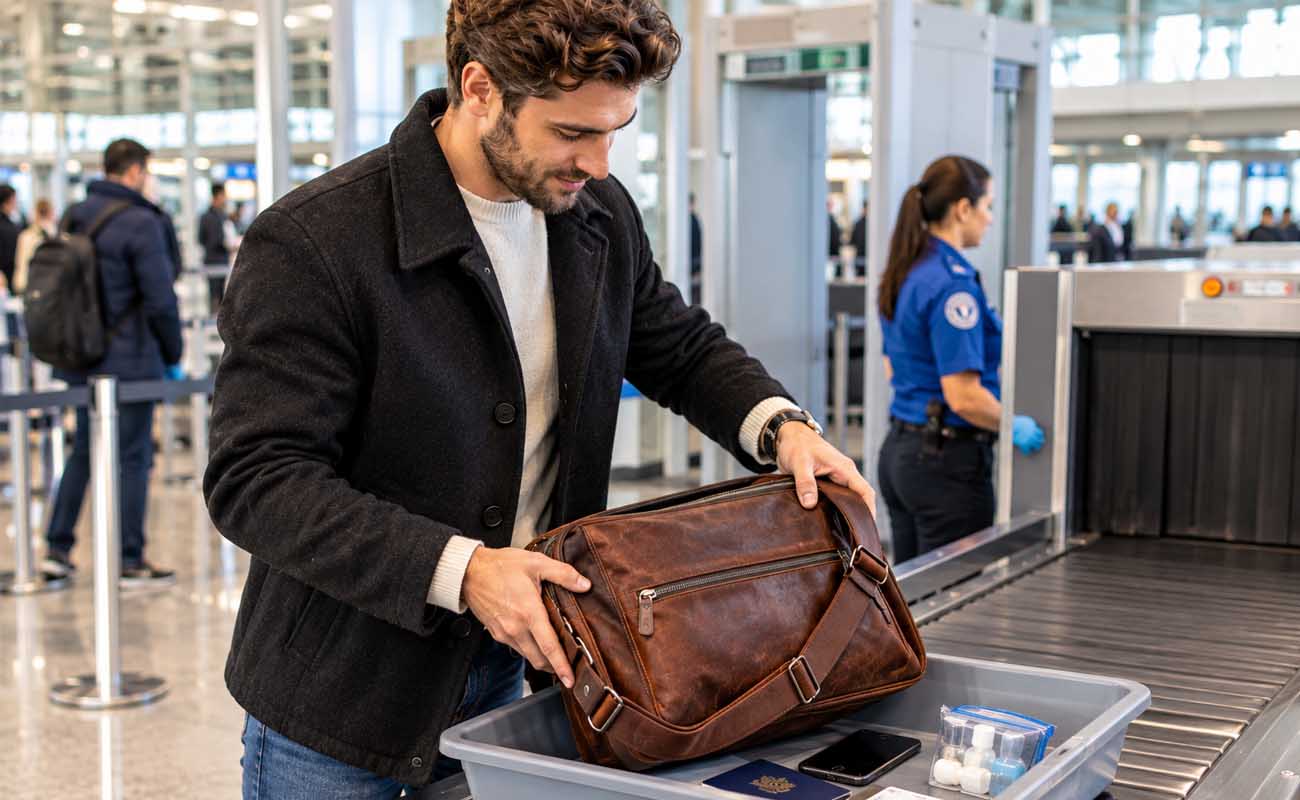
Preparation makes the checkpoint quick. Before you reach the line, take out your liquids bag and boarding pass, and make sure your phone and ID are easy to reach. Empty your pockets into the crossbody and close it, which keeps small items out of the bins and reduces alarms. Use a bag with fewer metal parts, because large buckles or chains can trigger additional screening in some cases.
When it is your turn, place the crossbody in a bin or on the belt as the officer directs, and take it off your body completely. Do not leave it on your shoulder, because it needs to go through the scanner. After screening, step to the side to repack, and touch each pocket once to confirm your passport and phone are back inside.
Is a Crossbody Bag Safe for Air Travel?
A crossbody is one of the safer ways to carry valuables through a busy airport. The strap crosses your body, so the bag stays close and is harder to snatch than a bag on one shoulder or in your hand. When you wear it in front of you, you can see and feel it at all times, which discourages pickpockets in crowded terminals, trains, and taxis.
You can make it safer still with a few habits. Choose a bag with a full zipper closure rather than a loose flap, keep valuables in the inside zip pocket, and turn the zipper toward your body in busy areas. Do not hang the bag on a chair back in a restaurant, and never leave it unattended on a tray at security. For more on this topic, read our guides on whether cross-body bags are safer.
What Are the Pros and Cons of Flying With a Crossbody Bag?
A crossbody suits many trips, but it is not perfect for all of them, so weigh both sides.
- Pro, hands free: you can handle your suitcase, coffee, and boarding pass at once.
- Pro, quick access: your passport and phone stay within reach.
- Pro, secure: the strap keeps the bag close to your body.
- Pro, easy to fit: it slides under the seat without a fight.
- Con, limited space: you must pack selectively and leave bulky items in your carry-on.
- Con, weight on one side: a heavy crossbody can tire your shoulder on long walks.
- Con, basic fares: if your ticket allows only one item, a small bag may not be enough.
How Does a Crossbody Compare With a Backpack or Tote for Flights?
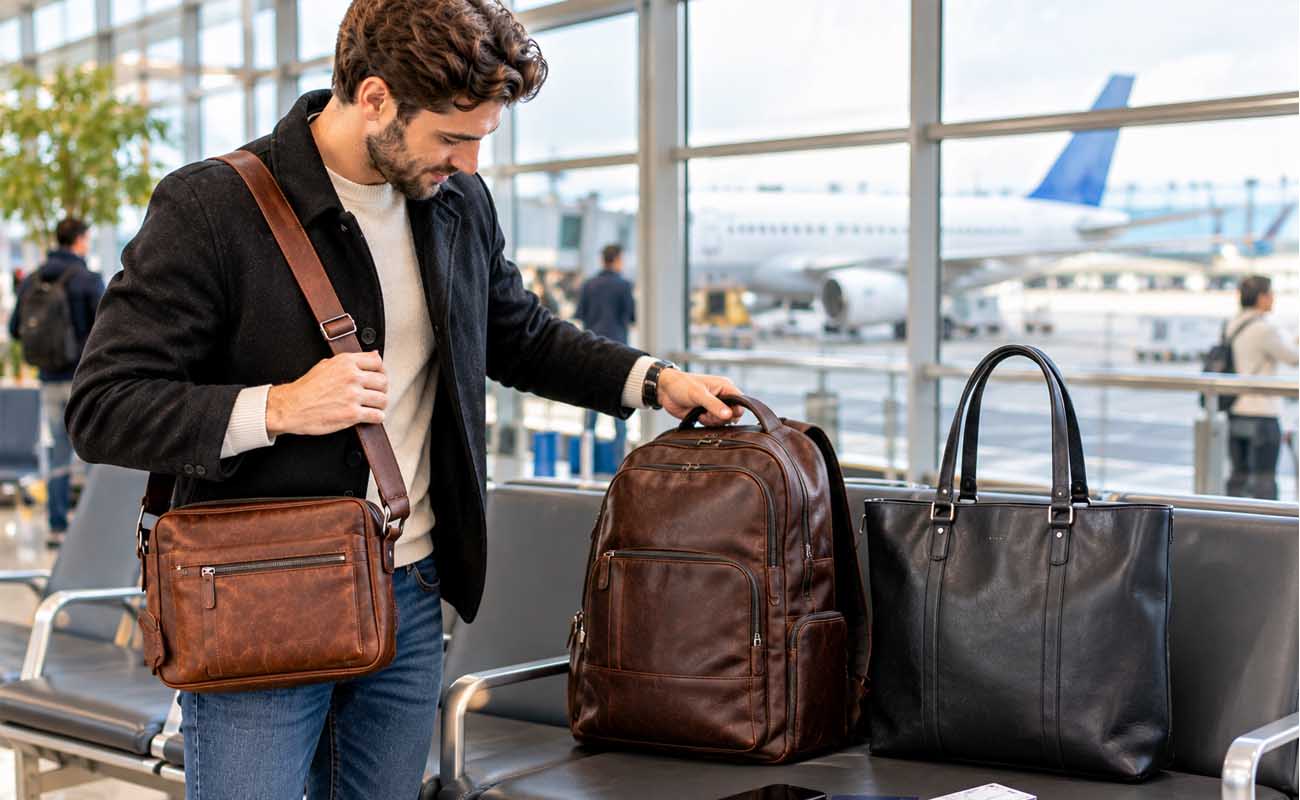
The right travel bag depends on how long your trip is and how much you carry. A crossbody is best for short trips, city breaks, and as the personal item that holds your essentials, because it keeps your hands free and your documents safe. A backpack carries more and spreads weight across both shoulders, so it suits long travel days and heavy loads. Our leather travel backpacks and the Javier leather travel laptop backpack are designed for that role.
A tote bag offers easy access and plenty of room, but it is open at the top and sits on one shoulder, which makes it less secure and less comfortable on long walks. If you are weighing similar styles, our comparison of sling bag vs crossbody shows how those two differ, and our guide to satchel vs messenger bags helps if you want a larger shoulder bag. For hands-free wear around the waist, read how to wear a belt bag properly.
How Do You Choose the Best Crossbody Bag for Flying?
Start with size and structure. Choose a bag that is compact enough to meet your airline’s personal item limit but roomy enough for a passport, phone, wallet, and a small tablet. A structured bag keeps its shape and protects your items, while a softer one squeezes more easily under a seat.
Then check the closure and pockets. A full zipper, an inside zip pocket for your passport, and a quick-access outer pocket for your phone make the biggest difference in an airport. Pick a strap that is wide enough to be comfortable, adjustable for your height, and strong at the attachment points.
Finally, choose the material carefully. Full-grain and top-grain leather are the best choices, because they are durable and age well on the road. You can learn the differences in our articles on top-grain leather, bi-cast vs genuine leather, and composite leather, or use these 8 ways to determine if it’s genuine leather. Synthetic options wear out sooner, and how long PU leather lasts explains why.
For travel, popular designs include the Dounia black leather mini crossbody bag, the Pistoia black leather crossbody bag with top handle, the Zendaya leather handbag crossbody bag, and the Margot leather crossbody laptop bag.
What Mistakes Should You Avoid With a Crossbody Bag at the Airport?
A few common errors cause delays and stress, so avoid them.
- Skipping the airline’s size rules: a bag that is too large can be refused or cost extra.
- Packing liquids over 3.4 ounces: they will be removed at the checkpoint.
- Putting a power bank in checked luggage: it must travel in the cabin.
- Overpacking the bag: a stuffed bag strains the strap and your shoulder.
- Keeping the passport in an outer pocket: it is easier to lose or lift.
- Leaving the bag unattended: never leave it on a bin, chair, or seat.
How Do You Care for a Leather Crossbody Bag After Travel?
A quick cleanup after each trip keeps a leather bag in good shape. Empty every pocket, shake out dirt, and wipe the surface with a soft, slightly damp cloth. Let the bag dry naturally, away from heaters and direct sun. If the leather feels dry, apply a thin layer of conditioner, paying attention to the strap, the zipper edges, and the corners. Store the bag lightly stuffed with paper in a cotton dust bag so it keeps its shape. For the full routine, read our guide on how to take care of a leather handbag, and browse our leather bag guides for more travel and care advice.
Why Buy a Travel Crossbody Bag From Unique Leather Bags?
Unique Leather Bags (ULB) makes leather bags to be used on real trips and kept for years. Our leather crossbody bags are built from quality leather with reinforced stitching, sturdy hardware, and practical pockets, so they handle airports, commutes, and weekend getaways. If you prefer a different carry style, explore our leather sling bags and leather handbags.
You also buy with confidence. ULB backs its products with a 5-year repair and exchange warranty, a 30-day return policy, and free shipping on orders over $150. The range covers men’s and women’s styles in classic browns, black, and richer colors, so you can pick a travel bag that fits your style.
Frequently Asked Questions
Yes. A crossbody bag is allowed on planes and usually counts as your personal item, which goes under the seat in front of you. Check your airline’s size limit before you fly.
Usually it counts as a personal item rather than a carry-on, so you can bring it in addition to a standard carry-on on most fares. Some basic fares allow only one item, so check your ticket.
Yes. Your bag goes through the scanner, so take it off and place it in a bin or on the belt as the officer directs.
Yes, if each container holds 3.4 ounces (100 ml) or less and all fit in one quart-size bag. Larger amounts of medically necessary liquids are allowed in reasonable quantities if you declare them.
You can if it fits, but you will usually need to remove it for screening unless you have TSA PreCheck. A large laptop is often better in a backpack.
It depends on your trip. A crossbody is best for essentials and short trips, while a backpack suits heavier loads. Many travelers use both together.
Final Thoughts
A crossbody bag is one of the easiest bags to travel with. It counts as a personal item on most fares, keeps your passport and phone close, leaves your hands free, and fits neatly under the seat. Follow your airline’s size rules, pack liquids within the 3-1-1 limit, keep power banks in the cabin, and choose quality leather so your bag survives many trips.
When you are ready to pick one, browse our leather crossbody bags, or look at the Verona mint leather crossbody bag and the Gisele leather crossbody backpack for a travel-ready option.


