


To fix a scratch on a leather bag, match the repair to the depth. Rub light surface scuffs with clean, dry fingers, then add a thin layer of leather conditioner. For moderate scratches, work in a beeswax-based leather balm. For deep scratches, fill the groove with a color-matched leather repair cream, let it dry, and condition the area. Always test on a hidden spot first.
Key Takeaways
- The depth of the scratch decides the fix, so check it before you buy anything.
- Light scratches often disappear with finger rubbing and a little conditioner.
- Deep scratches need a color-matched filler or repair cream, not more oil.
- Always test every product on a hidden spot of the bag first.
- Olive oil and vinegar are common internet hacks, but they can damage leather.
- Valuable or sentimental bags are best repaired by a professional.
How Bad Is the Scratch? Start With the Fingernail Test
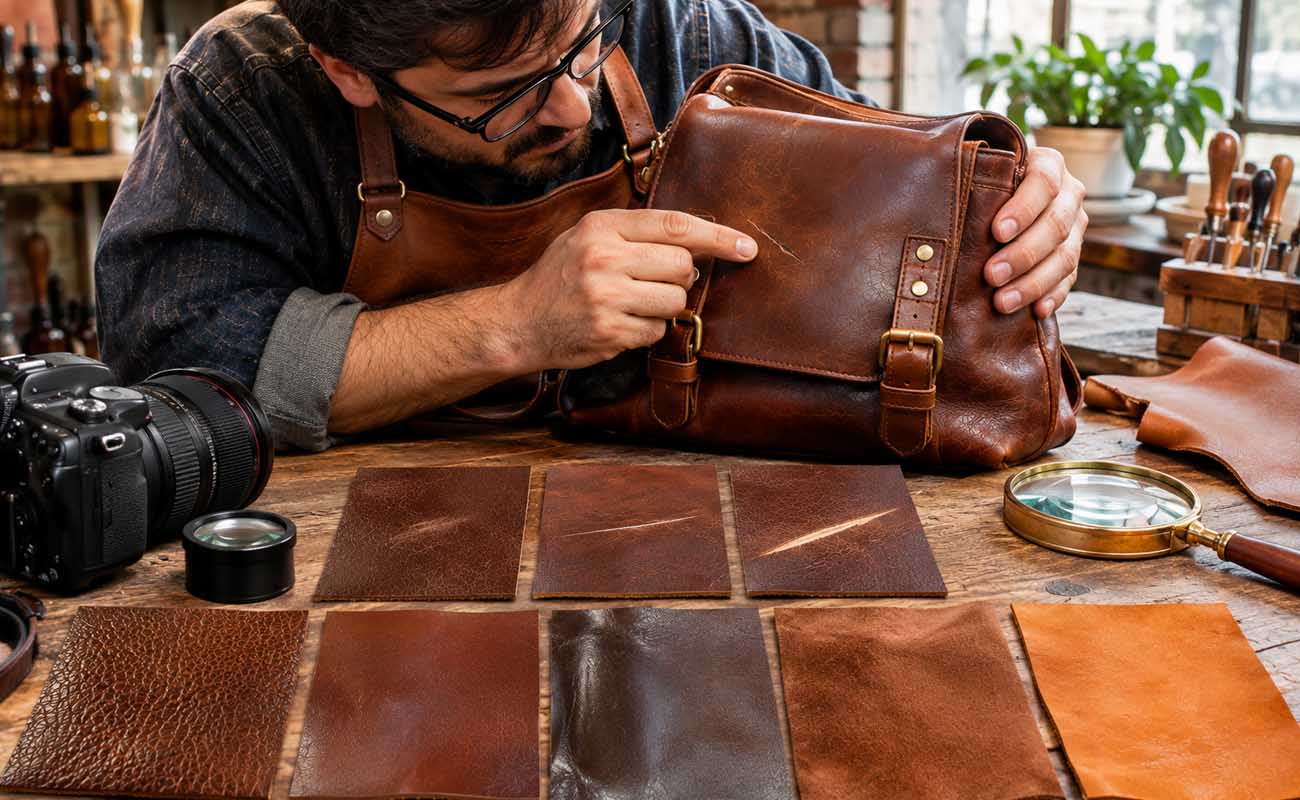
Every repair starts with one simple question: how deep is the mark? Run your fingertip across the scratch, and then drag a fingernail lightly over it. The result tells you which of the seven fixes to use, and it saves you from using a heavy repair on a light scuff.
If you can see the scratch but barely feel it, it is a surface scuff, and only the top finish or a thin layer of oil has been disturbed. If your fingernail catches slightly in the groove, it is a moderate scratch that has cut into the finish. If you can see lighter fibers, a different color underneath, or a groove you can feel clearly, it is a deep scratch or gouge, and some leather has been displaced or removed.
Look at the scratch in natural daylight and from a few angles, because artificial light hides depth. Take a photo before you start so you can compare the result afterward.
What Type of Leather Do You Have?
The type of leather changes how it reacts to repairs, so identify it before you apply anything. Full-grain and top-grain leather respond well to rubbing, conditioner, and balm, because their natural oils shift and blend. Finished or coated leather has a protective layer on top, and scratches in that coating usually need a color-matched touch-up rather than oil. Aniline and vegetable-tanned leather are very absorbent, so they can darken as they take in conditioner, and a hidden-spot test is especially important.
If you are not sure what you own, our guide to 8 ways to determine if it’s genuine leather shows how to check the grain, the edge, and the finish. Bonded and bi-cast leather behave differently from solid leather, because their surface is a coating that can peel when you rub it, and our comparison of bi-cast vs genuine leather explains why. If your bag is made of coated or synthetic material, skip fixes 1 to 4 and use only a color-matched repair product or a professional.
Which Fix Matches Which Scratch?
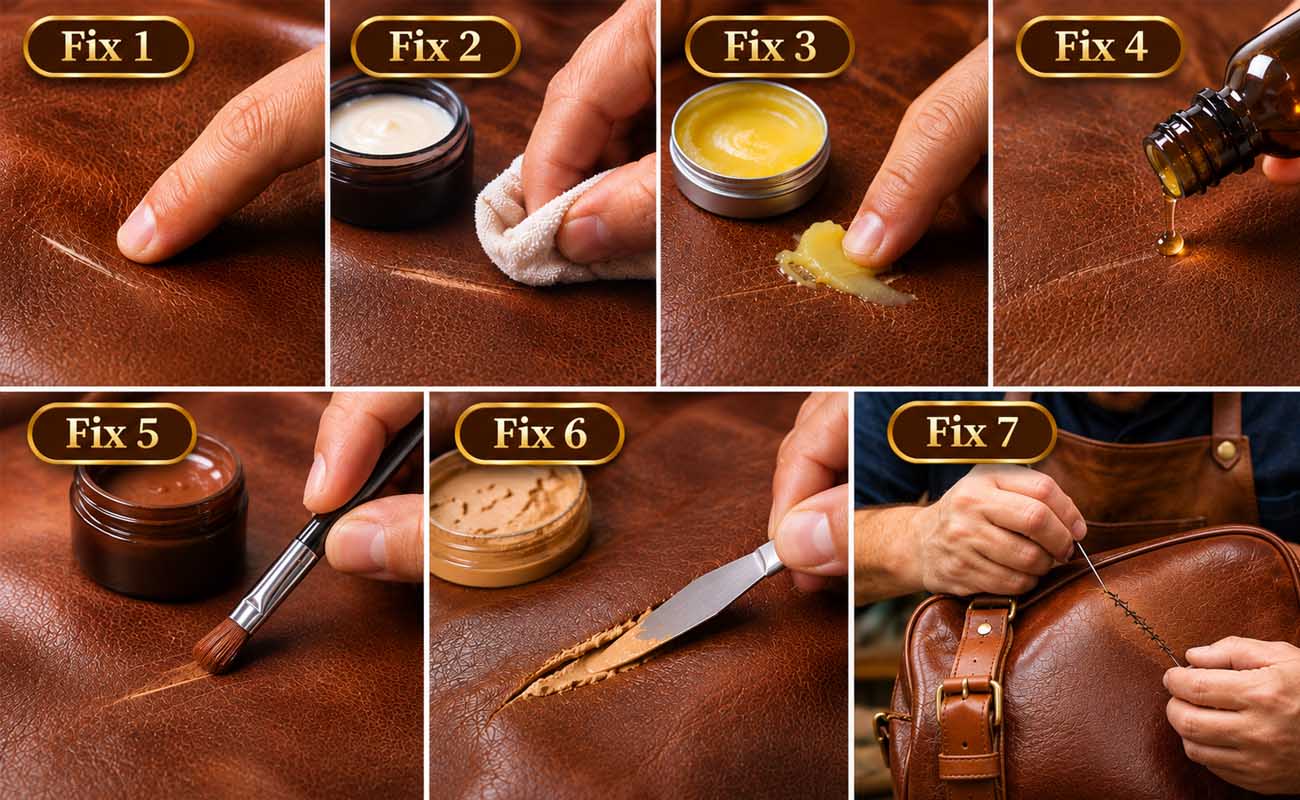
Here is the quick map from scratch depth to repair method.
| Scratch Level | How It Feels | Best Fix | Time |
| Surface scuff | Visible, not felt | Finger rub | 1 minute |
| Light scratch | Barely felt | Conditioner | 30 to 60 minutes |
| Moderate scratch | Catches a fingernail | Beeswax balm | 30 minutes |
| Colored or worn scratch | Shows a lighter patch | Color-matched cream | 1 to 2 hours |
| Deep scratch or gouge | Clear groove | Leather filler | Several hours |
| Large cut or tear | Material missing | Professional repair | Varies |
Work from the lightest fix to the heaviest, because every extra product increases the risk of darkening the leather.
Fix 1: Rub It Out With Your Fingers
For a surface scuff, the best tool is your own hand. Use a clean, dry fingertip and rub the scratch with firm, small circles for 30 to 60 seconds. The warmth and natural oils from your skin soften the leather’s surface, and the fibers move back together, which blends the mark into the surrounding grain.
This works best on full-grain and oil-finished leather, where the scratch is just displaced oil and wax. Make sure your hands are clean and dry, because dirt or lotion can leave marks. If the scratch fades, stop there. If it only softens, move on to Fix 2.
Fix 2: Condition the Scratch
A light scratch often fades once the leather is well moisturized. Apply a small amount of leather conditioner to a soft cotton cloth, not directly to the bag, and work it over the scratch in gentle circles. Then let it absorb for 15 to 60 minutes, and buff the area with a clean, dry cloth.
Use less than you think you need, because too much conditioner darkens the leather and leaves it sticky. Condition the full panel instead of just the scratch, so that any slight darkening spreads evenly and does not leave a visible patch. Dry, neglected leather may need a second round after a day. If you need a refresher on maintaining leather, read our guide to cleaning a leather tool belt, which uses a method that works well on any thick leather.
Fix 3: Use a Beeswax Balm
For a moderate scratch that catches a fingernail, a beeswax-based leather balm or wax cream gives more body than conditioner. The wax fills fine grooves and leaves a protective layer, which also helps the area resist new marks. Take a small amount on your fingertip, warm it with a few seconds of rubbing, and work it into the scratch in small circles.
Let the balm sit for a few minutes, then buff with a soft cloth until the surface feels smooth and dry. Do not apply thick layers, because balm builds up and can look cloudy on dark leather. This fix suits full-grain, vegetable-tanned, and oil-finished leather, where the balm blends with the natural finish.
Fix 4: Blend With a Small Amount of Leather Oil
Some leather types, especially oil-tanned and pull-up leather, handle a very small amount of a leather-specific oil, such as mink or neatsfoot oil. Wipe the area with a slightly damp cloth first, then apply a tiny amount of oil to the scratch and massage it in gently with your fingertip. After a few hours, buff the area with a dry cloth.
Treat this fix with care. Oil darkens leather, and the effect is hard to reverse, so apply only the smallest amount and test on a hidden spot first. Do not use this on light-colored, finished, or aniline leather unless you are sure of the result. If you are in doubt, choose a balm instead.
Fix 5: Cover With a Color-Matched Repair Cream
When the scratch removes color and leaves a pale line, oil will not fix it, because the problem is missing pigment. Use a leather repair cream or leather dye that matches your bag’s color, which you can find at leather supply stores or online. Clean the area first, then apply a very thin layer with a cotton swab or a small sponge, staying inside the scratch.
Let it dry fully, then buff lightly and add a second thin coat if the first still shows. Finish with a small amount of conditioner to restore the surface. Always test the color on an inside spot first, because a bad match is harder to hide than the original scratch. Tan leather is the hardest to match, and black and dark brown are the easiest.
Fix 6: Fill Deep Scratches and Gouges
A deep scratch that removes leather needs a filler, not oil. Choose a leather filler or repair compound in a color close to your bag, and press a thin layer into the scratch with a small applicator or a cotton swab until it is level with the surrounding surface. Smooth out any ridges and let it dry, then add another thin layer if the groove is still visible.
Once it is fully dry, lightly buff or sand the area with very fine sandpaper so it matches the surrounding grain, then apply matching dye if needed and finish with conditioner. Work in thin layers and give each one time to dry, because one thick layer cracks and peels. Deep repairs take practice, so if the bag is expensive, test the process on a hidden area or on a scrap first.
Fix 7: Take It to a Professional
Some damage is better left to an expert. If the bag has a long cut, a torn edge, a missing chunk, or a scratch across a prominent area, a leather repair shop can match the color, rebuild the grain, and refinish the surface. The same goes for bags that are expensive, vintage, or sentimental, and for exotic leathers, which are much harder to repair at home.
Ask the shop for a quote and a sample of previous work before you commit. A professional repair costs more than a home kit, but far less than replacing a good bag.
Which Home Remedies Should You Avoid?
Many online guides recommend kitchen products for scratches, and some of them do more harm than good. Olive oil is the most common, and it can temporarily hide a fine line, but it can darken the leather unevenly, leave a greasy film, and turn rancid over time. Vinegar is acidic and can dry out and discolor the finish, especially on dyed leather. A hair dryer or heat gun dries the leather and can warp or crack it. Nail polish remover and rubbing alcohol strip dye and finish, and they can turn a small scratch into a large pale patch.
Alcohol-free wipes are fine for light cleaning, but they do not repair a scratch. If a product is not made for leather, test it on a hidden spot, and if you are unsure, skip it.
How Do You Fix Scratches on Suede or Nubuck?
Suede and nubuck are different, because their surface is a soft, brushed nap rather than a smooth grain, and oil or balm will stain them. For scratches, use a suede brush or a clean, dry cloth to brush the nap back and forth, which lifts the fibers and hides the mark. A suede eraser can remove stubborn scuffs, and a light spray of suede protector afterward helps prevent new marks. Keep water, conditioner, and wax away from the area.
How Do You Prevent Scratches on a Leather Bag?
Prevention keeps a bag looking good for years, and it takes very little effort.
- Condition regularly: well-moisturized leather resists scratches better than dry leather.
- Keep keys and sharp items separate: use an inner pocket or a pouch for them.
- Store the bag properly: use a cotton dust bag and avoid piling bags on top of each other.
- Use a protectant: a leather protector or wax adds a thin barrier.
- Avoid rough surfaces: set the bag on a clean, smooth surface, not on the floor.
- Clean gently: wipe dust off with a soft cloth, because grit acts like sandpaper.
What Mistakes Should You Avoid When Fixing Scratches?
Most repair damage comes from rushing or using the wrong product.
- Skipping the hidden-spot test: a product can darken or stain without warning.
- Using too much oil or conditioner: it darkens leather and leaves a sticky finish.
- Rubbing a coated surface hard: it can wear the finish and make the scratch bigger.
- Using heat to dry: hair dryers and heaters crack and warp leather.
- Matching the color badly: a patch that is the wrong shade stands out.
- Filling in one thick layer: it cracks and peels instead of blending.
Why Buy a Scratch-Resistant Leather Bag From Unique Leather Bags?
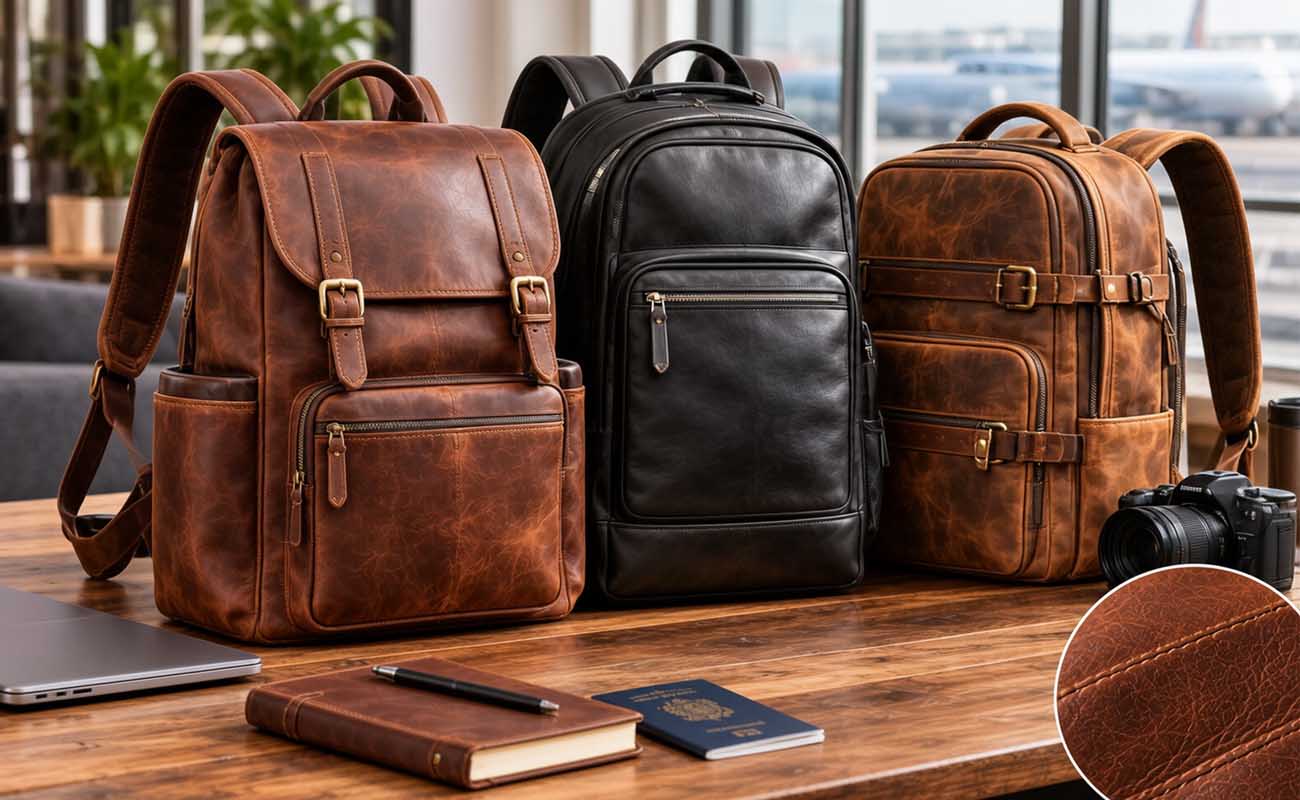
Unique Leather Bags (ULB) makes leather bags from quality leather, with reinforced stitching and sturdy hardware, so they handle daily use and age well. Our leather backpacks and leather laptop backpacks are built for commuting and travel, and styles such as the Adrano brown leather laptop backpack, the Amal black handcrafted leather backpack, and the Javier leather travel laptop backpack show how full-grain leather develops character instead of falling apart.
You also buy with confidence. ULB backs its products with a 5-year repair and exchange warranty, a 30-day return policy, and free shipping on orders over $150. For more care advice, browse our leather bag guides.
Frequently Asked Questions
Rub light scratches with clean, dry fingers and add a little leather conditioner. Use a beeswax balm for moderate scratches, and a color-matched repair cream or filler for deep ones. Test every product on a hidden spot first.
Light scratches on full-grain or oil-finished leather often disappear completely. Deep scratches can be filled and color-matched, but they may stay faintly visible.
It can hide a fine line for a short time, but it can darken the leather, leave a greasy film, and turn rancid. A leather conditioner or balm made for the job is a safer choice.
It is best to avoid it. Vinegar is acidic and can dry out and discolor the finish. Use a leather-safe product instead.
Press a color-matched leather filler or repair cream into the scratch in thin layers, let each layer dry, lightly sand if needed, then apply matching dye and conditioner.
Take it in if the damage is a large cut, a tear, or a missing piece, or if the bag is expensive, vintage, or made from exotic leather.
Final Thoughts
Fixing a scratched leather bag starts with checking the depth, because the right fix depends on it. Rub light scuffs with your fingers, condition light scratches, use a balm for moderate ones, and fill or color-match deep ones. Skip the kitchen hacks, test every product on a hidden spot, and use a professional for valuable bags. With the right method, most scratches fade, and the bag looks better for years.
When you are ready for a new bag built to age well, browse our leather backpacks or explore our leather laptop backpacks for daily carry.


